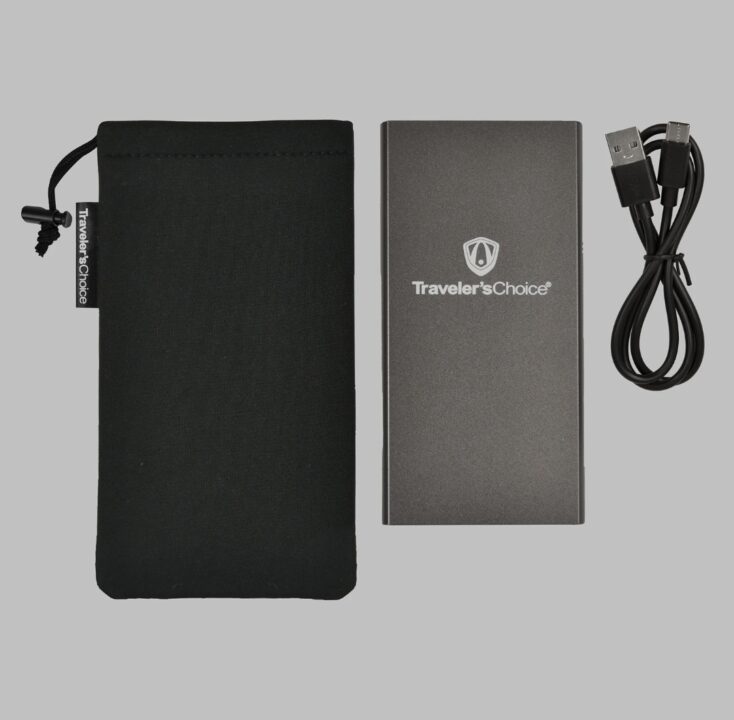
Traveling today isn’t just about what’s in your suitcase. It’s about what’s in your carry-on. And increasingly, the make-or-break item isn’t a neck pillow or noise-canceling headphones. It’s a portable power bank.
I’ve lost count of how many times I’ve heard someone on transit say things like, “I just need 5% more battery,” while frantically hunting for a neighbor that will allow them suck some juice from their power banks. Many of us have also been in that kind of situation where you’re on 3%, your boarding pass is in your email, and the only visible plug is occupied by someone live-streaming a mukbang. It’s a modern inconvenience with old-school consequences.
A power bank won’t change the world. But it might just save your day .
Power Is Not Always Accessible, Even in 2025
Let’s start with the myth of modern infrastructure. Yes, airports have improved. So have planes, trains, and cafés. But accessibility doesn’t always equal availability. The outlet-to-person ratio is still appalling in most public spaces. And when you do find a plug, it’s usually a warzone.
On trains, there might be a socket for every seat row. That is, until you discover it’s broken. In cafes, you’ll find one, maybe two outlets. Both are inevitably taken by people with entire extension cords powering up multiple devices.
Even hotels are guilty. I’ve stayed in allegedly “tech-forward” rooms where the only outlet is inconveniently placed behind the headboard.
The point is, counting on public power is like relying on airplane Wi-Fi. It’s possible, but usually disappointing.
Your Phone Isn’t Just a Phone When You Travel
One reason the stakes are higher when you travel is because your phone becomes your everything.
It’s your:
- Boarding pass
- Map
- Wallet (Apple Pay, Google Pay)
- Translation device
- Camera
- Emergency contact system
- Entertainment hub
Losing battery doesn’t just mean you can’t check TikTok. It means you are suddenly cut off from your itinerary, your directions, your ride share, and your ability to contact anyone. You have likely seen people cry in train stations in rural towns because they could not access their hotel address.
In those moments, a charged phone is less about convenience and more about security.
Emergencies Don’t Wait for Full Battery
We don’t talk enough about how emergencies often start small.
Maybe your flight gets canceled and you need to rebook fast. Or, you are rerouted and now have 15 minutes to download a transit map before hopping on a bus. Maybe you’ve landed late and the airport’s Wi-Fi is down.
In any of those cases, your phone is your lifeline. But what if it’s dead?
Having a portable charger isn’t just for influencers filming their layovers. It’s for anyone who doesn’t want to be left vulnerable in the exact moments they need control the most.
Modern Travel Is Draining, Period
Despite energy-efficient updates, modern smartphones still struggle to make it through a full travel day without charging. We underestimate how draining travel can be on devices. Think about it:
- Constant location tracking from maps
- Frequent toggling between apps
- Roaming data or sketchy Wi-Fi
- Streaming podcasts or movies
- Playing music
- Taking photos and videos
- Background app updates in foreign networks
It adds up. And fast.
You might leave your hotel at 9am at 100%. By 2pm, you’re hunting for plugs like it’s a post-apocalyptic scavenger hunt.
Power Banks Are Cheaper, Smaller, and Better Than Ever
There was a time when portable chargers were clunky bricks that barely worked. Not anymore.
For under $30, you can buy a reliable power bank that fits in your palm and fully charges most smartphones two or three times. Higher-end models can also power tablets, headphones, or even laptops. A good example is the Anker 747 PowerCore 26K costing around $145 and can charge your laptop full through a USB C, at least once.
Some models are no larger than a pack of gum. Many come with built-in cables so you don’t need to carry extra cords. Others include solar charging for eco-conscious travelers or LED displays that show exactly how much juice is left.
In other words, the excuses are dwindling.
Scenarios Where a Power Bank Matters More Than You Think
Let’s walk through a few real-world situations where having a power bank goes from “nice to have” to “thank God I brought this.”
1. Your flight is delayed on the tarmac for 3 hours.
You’re told to stay seated. Your phone is at 17%. The in-seat USB charger doesn’t work. Your boarding pass is digital. Do you:
- A. Panic
- B. Use a power bank and scroll through your saved downloads with serenity
2. You’re navigating a new city with no knowledge of the local language.
You’re relying on Google Translate and offline maps. Then your battery hits 5%. Suddenly, that backup power source feels like your only translator.
3. You’re hiking or exploring outdoors.
Maybe there’s no signal. But your phone is your flashlight, your compass, your clock, your camera, and your emergency call device. A power bank lets it be those things all day.
4. You’re a parent traveling with kids.
Your child is quiet because they’re watching Encanto for the fifth time. Your device battery hits 10%. Are you really willing to risk that kind of chaos?
What to Look For in a Power Bank
If you’re convinced to buy one (and you should be), don’t grab the cheapest thing at the airport convenience store. Here’s what actually matters:
- Capacity: Measured in mAh. A true 10,000mAh will fully charge most phones once or twice. 20,000mAh can do even more or handle tablets.
- Output speed: Look for “fast charging” or at least 2.1A output.
- Number of ports: One port is fine for solo travel. More is better for couples or families.
- Size and weight: Pocket-sized for urban travel. Larger ones for longer trips.
- Built-in cables: Some come with Lightning, USB-C, or micro-USB cables attached.
- Pass-through charging: Lets you charge both your device and the power bank at once.
But Isn’t This Just More Stuff to Carry?
Yes. But we don’t complain about carrying a wallet or a passport. A power bank belongs in that category. It’s a thing you may not use daily, but deeply regret forgetting when you need it.
It’s lighter than the stress of a dead phone. And unlike souvenirs or extra shoes, it earns its place in your bag every single day.
Wrapping Up
Travel is unpredictable. That’s part of what makes it exhilarating and, let’s be honest, exhausting. A power bank won’t fix every travel woe. But it puts one piece of the puzzle back in your hands.
In a world where everything runs through our phones, the ability to charge it anywhere becomes more than convenience. It becomes autonomy.
Bring the power bank.
Because running out of battery is modern-day marooning. And you deserve better than that on your journey.